


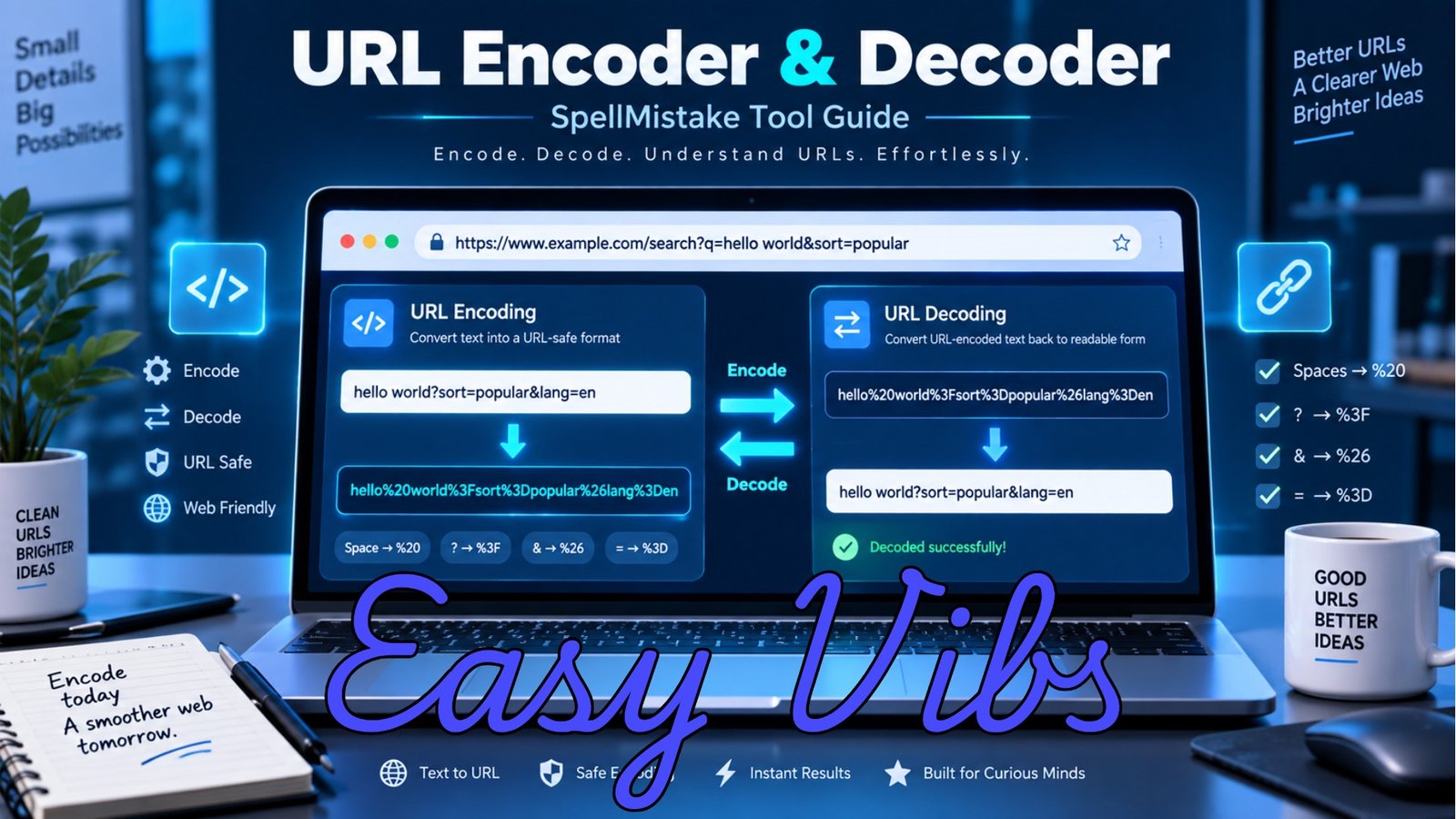
Have you ever copied a web link and noticed strangew symbols, broken spaces, or characters like %20 and %3F appearing in the URL? These issues happen because URLs cannot directly support every character used in normal text. A proper encoding system is needed to make links safe and readable for browsers.
The url encoder and decoder SpellMistake tool helps users quickly convert URLs into browser-friendly formats and decode encoded links back into readable text. Whether you are a developer, SEO professional, content creator, or regular internet user, this tool makes URL formatting simple, accurate, and hassle-free.
In this guide, you will learn how URL encoding works, why it matters, how to use an URL encoder decoder, and how SpellMistake can help you manage links efficiently.
Featured Snippet
A URL encoder and decoder SpellMistake tool converts special characters into URL-safe formats and reverses encoded URLs back into readable text. It helps prevent broken links, improves compatibility, and ensures URLs work correctly across browsers, websites, and applications.
What Is a URL Encoder and Decoder?
A URL encoder decoder is an online utility that transforms characters inside a URL into a format that web browsers and servers can understand.
URLs follow strict formatting rules. Characters such as:
- Spaces
- Symbols
- Non-English characters
- Special punctuation marks
may create errors if they are not converted properly.
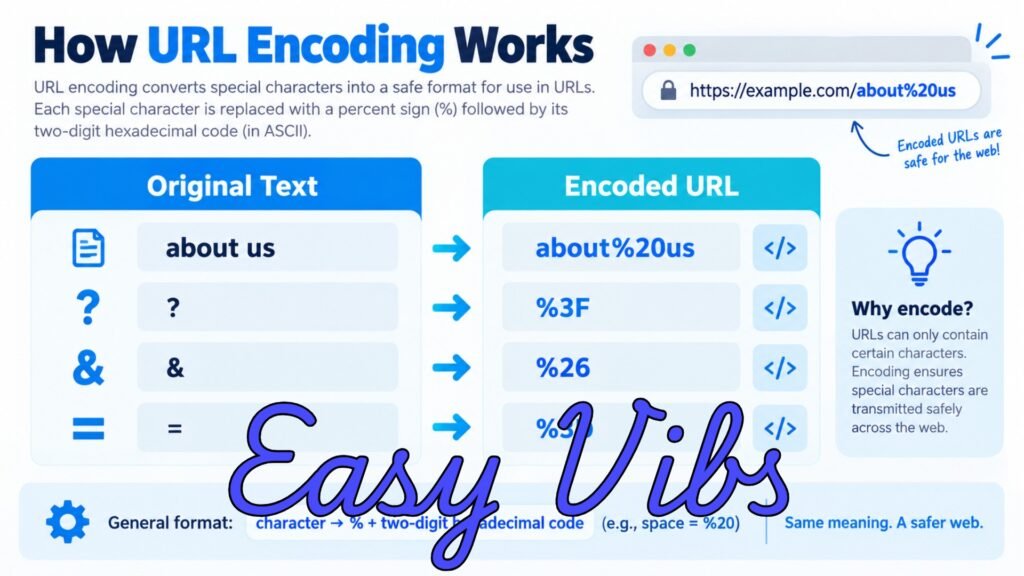
URL encoding replaces unsupported characters with a percentage sign (%) followed by hexadecimal values.
For example:
Original text:
my website.com/about usEncoded URL:
my%20website.com/about%20usThe reverse process is called URL decoding, where encoded values are converted back into normal readable text.
Why Do You Need a URL Encoder Tool?
A reliable url encoder is useful whenever you need to create or share web links containing special characters.
Common situations include:
1. Creating SEO-Friendly URLs
Search engines prefer clean and properly structured URLs. Incorrect characters can make URLs difficult for crawlers to understand.
Example:
Incorrect:
example.com/blog/my articleCorrect:
example.com/blog/my%20article2. Sharing Links on Different Platforms
Social media platforms, emails, and messaging apps may modify broken URLs. Encoding ensures links remain functional.
3. Working With APIs
Developers frequently use URL parameters in APIs. Characters like:
&
=
?
#
must be encoded correctly to avoid errors.
4. Supporting Multiple Languages
Websites with Arabic, Urdu, Chinese, or other languages require encoding to display characters properly.
How Does URL Encoding Work?
URL encoding follows a simple replacement system.
Certain characters have special meanings inside URLs, so they are converted into safe formats.
Common URL Encoding Examples
| Character | Encoded Value |
|---|---|
| Space | %20 |
| ? | %3F |
| & | %26 |
| = | %3D |
| # | %23 |
| / | %2F |
For example:
Original:
https://example.com/search?q=best toolsEncoded:
https://example.com/search?q=best%20toolsThe browser understands the encoded version without confusion.
URL Encoder and Decoder SpellMistake: How It Works
The url encoder and decoder SpellMistake tool is designed to simplify URL conversion without requiring technical knowledge.
Users can quickly:
- Encode normal text into URL format
- Decode encoded URLs into readable text
- Fix broken links
- Prepare URLs for websites and applications
- Check URL formatting before publishing
The tool works directly inside your browser, making it convenient for beginners and professionals.
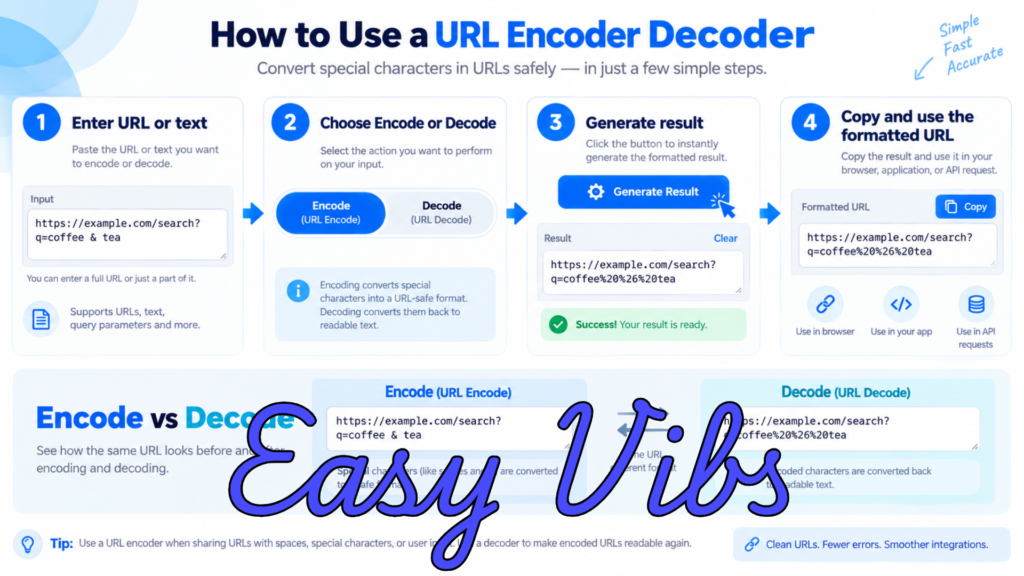
Step-by-Step Guide: How to Use a URL Encoder Decoder
Follow these simple steps:
Step 1: Enter Your URL or Text
Copy your URL, search query, or text containing special characters.
Example:
https://example.com/product namePaste it into the encoder field.
Step 2: Choose Encoding or Decoding
Select the required action:
Encode:
Converts normal text into URL-safe format.
Decode:
Changes encoded characters back into readable text.
Step 3: Generate the Result
Click the convert button to instantly receive the formatted URL.
Step 4: Copy and Use the URL
Use the final result in:
- Websites
- Blogs
- Marketing campaigns
- APIs
- Social media posts
URL Encoder vs URL Decoder: Key Differences
Although they work together, URL encoding and decoding perform opposite functions.
| Feature | URL Encoder | URL Decoder |
|---|---|---|
| Purpose | Converts text into URL format | Converts URL format into readable text |
| Direction | Normal text → URL-safe text | Encoded URL → Normal text |
| Main Users | Developers, marketers, SEO experts | Developers, analysts, researchers |
| Example | Space becomes %20 | %20 becomes space |
| Usage | Creating links | Understanding links |
Both functions are important for maintaining proper web communication.
Benefits of Using a URL Encoder SpellMistake Tool
A professional url encoder SpellMistake solution offers several advantages:
Prevents URL Errors
Incorrect characters can cause broken pages or failed requests. Encoding prevents these issues.
Saves Time
Instead of manually converting symbols, users can instantly generate a correct URL.
Improves Website Compatibility
Encoded URLs work better across browsers, servers, and online platforms.
Helps Developers
Programmers can quickly test URL parameters and API requests.
Supports SEO Workflows
SEO professionals can verify links before publishing campaigns or tracking URLs.
Real Example: Fixing a Broken Marketing URL
Imagine a marketer creates this tracking URL:
example.com/products/new shoes?color=blue redThe space between “blue” and “red” can create problems.
After encoding:
example.com/products/new%20shoes?color=blue%20redThe browser can now process the link correctly.
This small formatting improvement can prevent tracking failures and lost clicks.
Common URL Encoding Mistakes to Avoid
Even experienced users sometimes make URL formatting mistakes.
Encoding Too Much
Not every character needs encoding. Over-encoding can make URLs harder to manage.
Forgetting Query Parameters
Characters like & and = inside parameters must be handled carefully.
Confusing Encoding With Encryption
URL encoding does not protect information. It only changes formatting.
Editing Encoded URLs Manually
Manual changes can easily introduce errors. Using a reliable URL encoder decoder is safer.
URL Encoding for SEO: What You Should Know
SEO-friendly URLs should be:
- Short
- Clear
- Easy to read
- Properly formatted
Search engines can understand encoded URLs, but excessive special characters may reduce readability.
Good URL:
website.com/blog/url-guideLess ideal:
website.com/blog/url%20guide%20articleFor SEO campaigns, always create simple URLs whenever possible and use encoding only when necessary.
Who Should Use a URL Encoder Decoder?
A URL encoder decoder is useful for many users:
Developers
For API requests, programming projects, and web applications.
SEO Specialists
For checking tracking links, redirects, and campaign URLs.
Digital Marketers
For creating reliable promotional links.
Bloggers
For sharing articles and resources correctly.
Students
For understanding web technologies and internet communication.
Frequently Asked Questions
1. What is a URL encoder and decoder SpellMistake?
A URL encoder and decoder SpellMistake tool converts URLs between normal text and browser-compatible formats. It changes special characters into encoded values and can also decode those values back into readable text.
2. What does a URL encoder do?
A URL encoder converts unsafe characters into URL-safe formats. For example, spaces become %20, allowing browsers and servers to correctly process the link without errors.
3. Is URL encoding the same as URL encryption?
No. URL encoding only changes the format of characters so they can be transferred safely. It does not hide information or provide security like encryption methods.
4. Why do websites need URL encoding?
Websites use URL encoding because URLs cannot directly handle every character. Encoding ensures links containing spaces, symbols, or different languages work correctly across browsers.
5. Can I use a URL encoder for SEO links?
Yes. A URL encoder can help SEO professionals create properly formatted links, especially for tracking URLs, campaign parameters, and pages containing special characters.
6. How does URL decoding work?
URL decoding reverses encoding. It converts values like %20 back into spaces and restores the original readable URL or text.
7. Is the URL encoder decoder SpellMistake tool free?
Yes, online URL encoder decoder tools are generally available for free and allow users to quickly format and convert URLs without installing software.
Conclusion
The url encoder and decoder SpellMistake tool makes URL formatting simple by converting complicated characters into browser-friendly formats and restoring encoded links when needed. Proper URL encoding prevents broken links, improves compatibility, and supports smoother website communication.
Whether you are managing SEO campaigns, developing applications, working with APIs, or simply sharing online links, using a reliable url encoder decoder can save time and reduce errors.
You May Like: How Much Does the 493xds5.0 Software Cost? Full Pricing Guide
